

The Apparent Certainty Framework

For a long time, I struggled to explain something I kept noticing in pulmonary function testing.
Some results looked perfectly acceptable:
repeatable, technically valid, numerically clean.
And yet the certainty of the result often seemed greater than the process itself justified.
Not because the testing was necessarily “wrong.”
Not because standards had failed.
But because pulmonary function testing is a surprisingly complex procedural system involving:
- patient performance
- coaching
- timing
- maneuver selection
- interpretation
- reduction of variability into final reported values
Over time, I started organizing those observations into a conceptual framework I’ve been calling the Apparent Certainty Framework (ACF).
At its core, it’s an attempt to map how unresolved variability can become compressed into clean, authoritative-looking outputs.
This framework isn’t intended to undermine pulmonary function testing or existing standards. It’s an attempt to clarify how certainty is produced, reduced, and represented within a complex testing system.
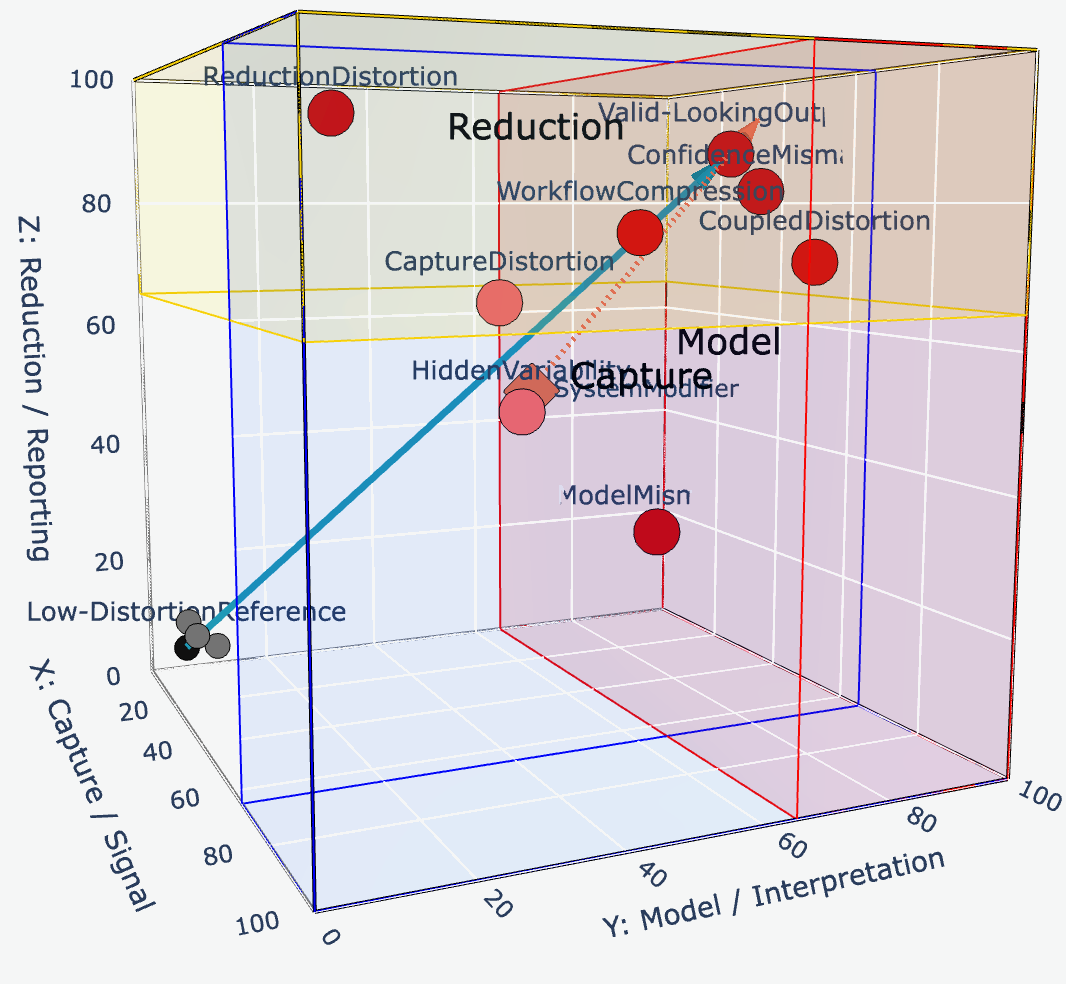
If you want to explore deeper, here’s the interactive version.